How to Check Which systemd Services Can Start Claude Code on Linux
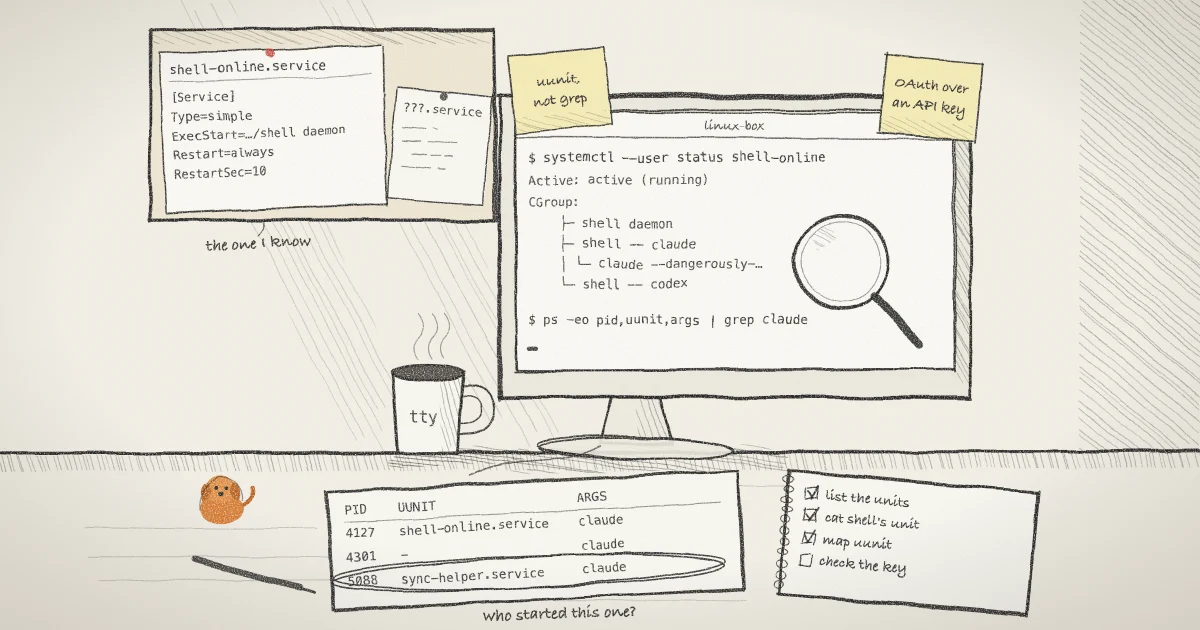
Find the systemd units that can launch a coding agent, tell shell.online's own service from the rest, and see which credential its agents get.
Artemii Amelin11 min read
Guides, security notes and engineering write-ups on sharing live terminal sessions: read-only links, end-to-end encryption, self-hosting, and keeping an eye on a coding agent from your phone.
Find the systemd units that can launch a coding agent, tell shell.online's own service from the rest, and see which credential its agents get.
Artemii Amelin11 min read
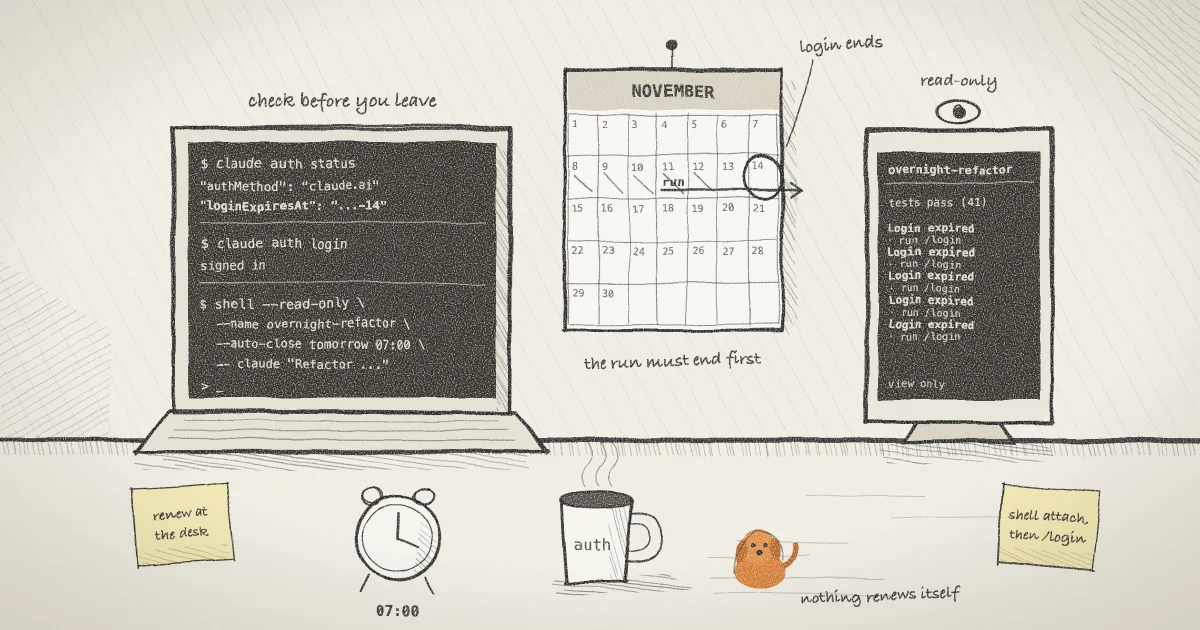
Read the login end date Claude Code 2.1.318 reports, renew before a long run, and watch the run from your phone through a read-only shell.online link.
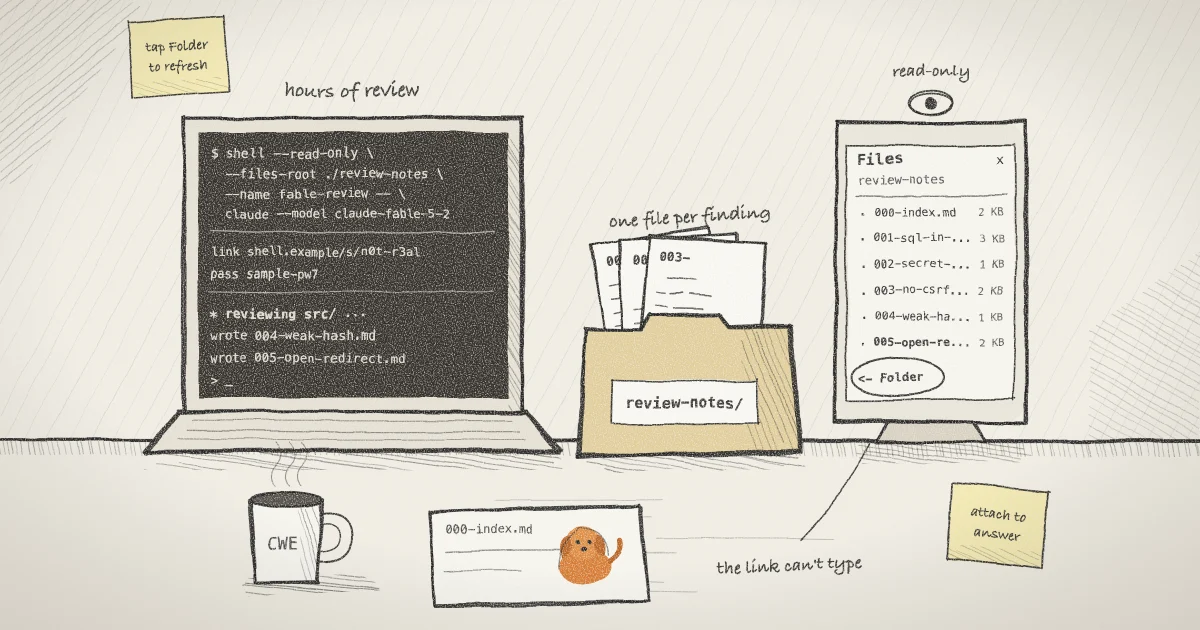
Run a Claude Fable 5.2 review in Claude Code behind a read-only shell.online link, share one findings folder, and read each finding on your phone as it lands.
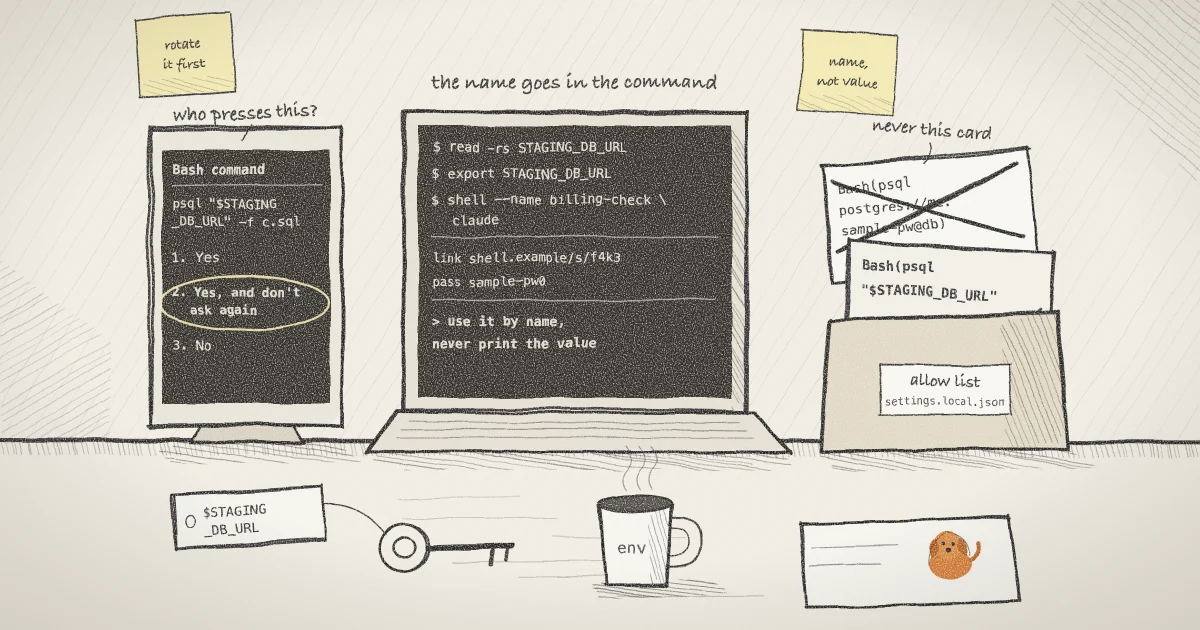
Check what Claude Code's don't ask again option has saved, pass a shared session its secret by name, and see what shell.online does not filter.
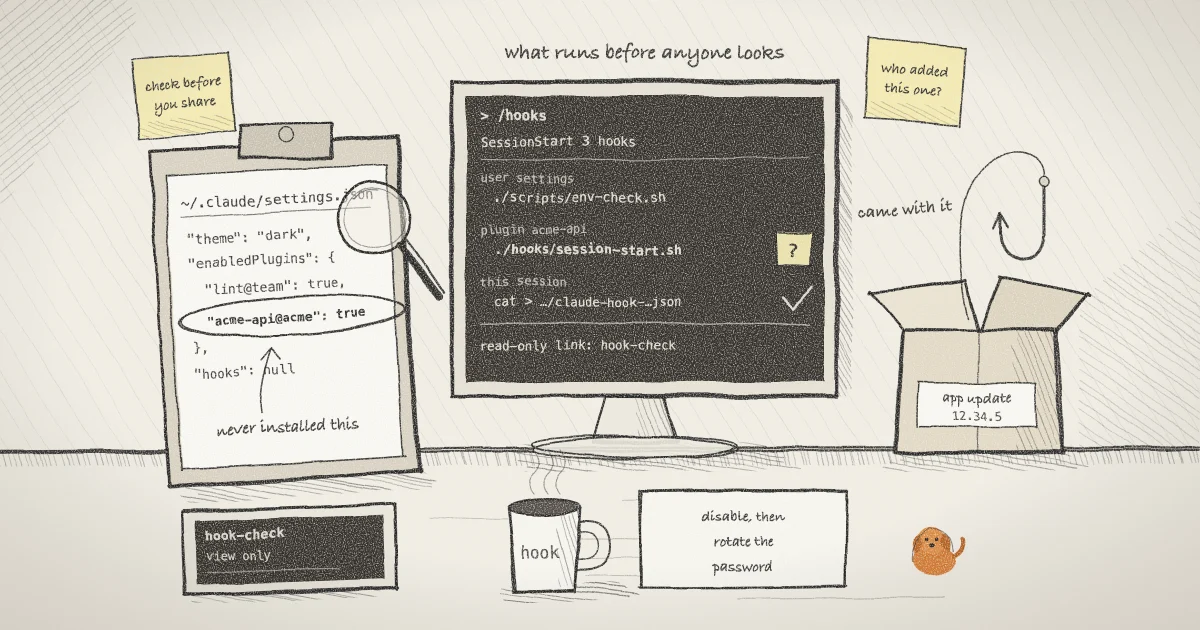
List the plugins and startup hooks your coding agents load, see the one hook shell.online adds to a Claude Code launch, and remove what you did not install.
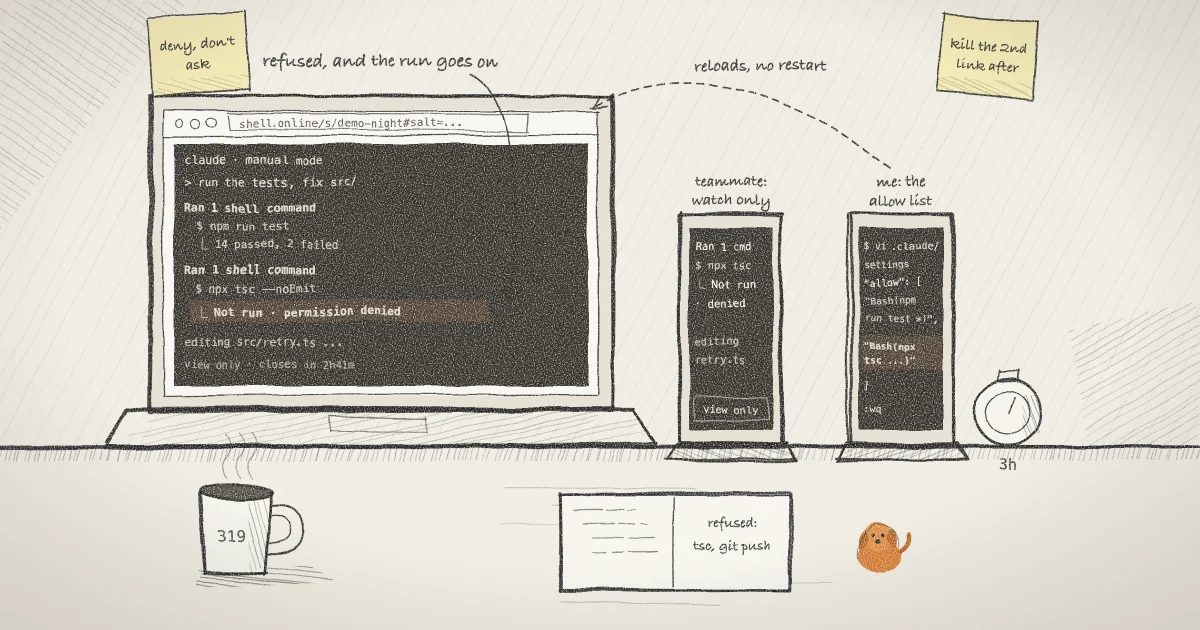
Run Claude Code 2.1.319 so it refuses instead of asking, share it read-only, and add an allow rule from your phone through a second session while it keeps going.
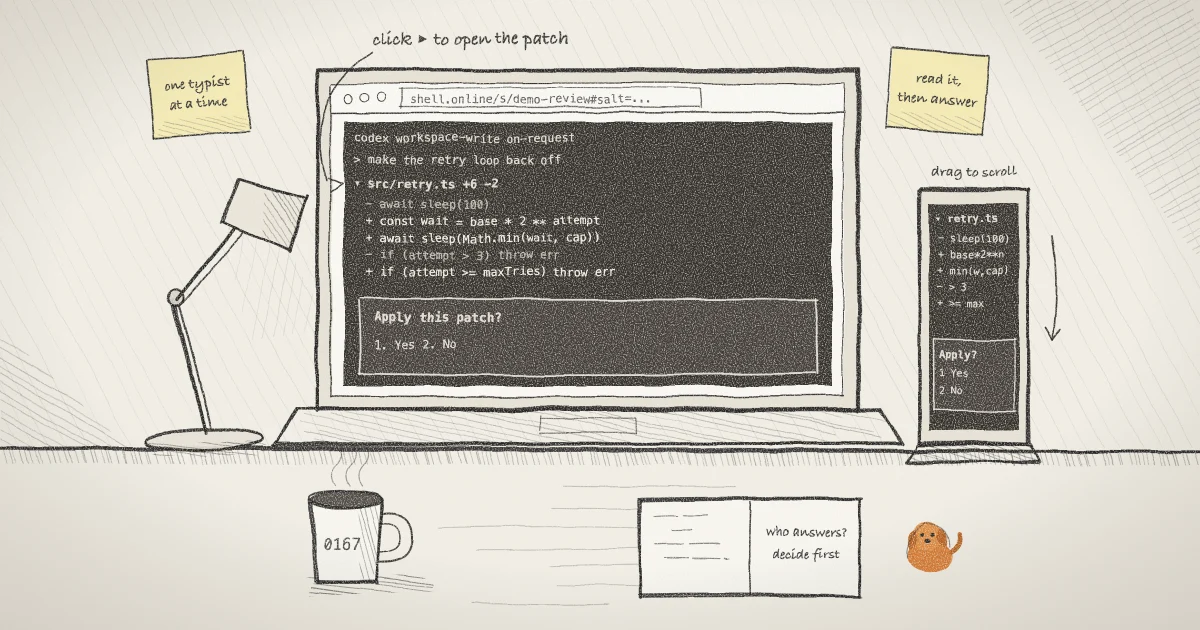
Run Codex 0.167.0 under shell.online, open its patch details from a laptop or phone while the approval prompt waits, and decide who answers.
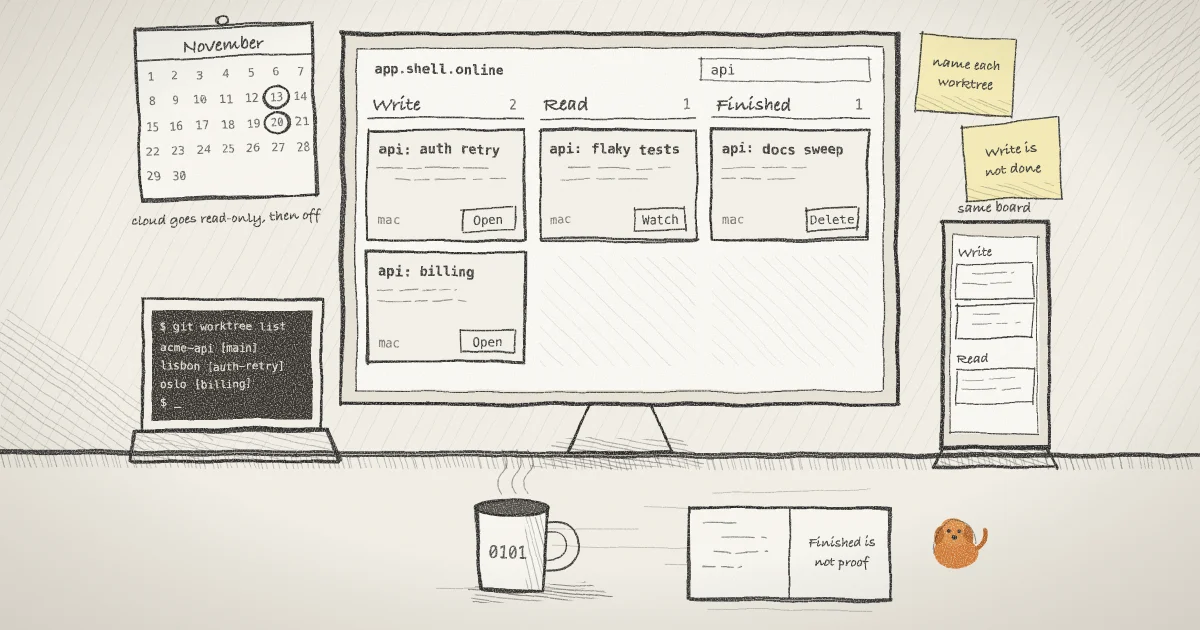
Move Conductor workspaces to your machine before November 13, start each agent under shell.online with a name, and follow them all on the app's session board.
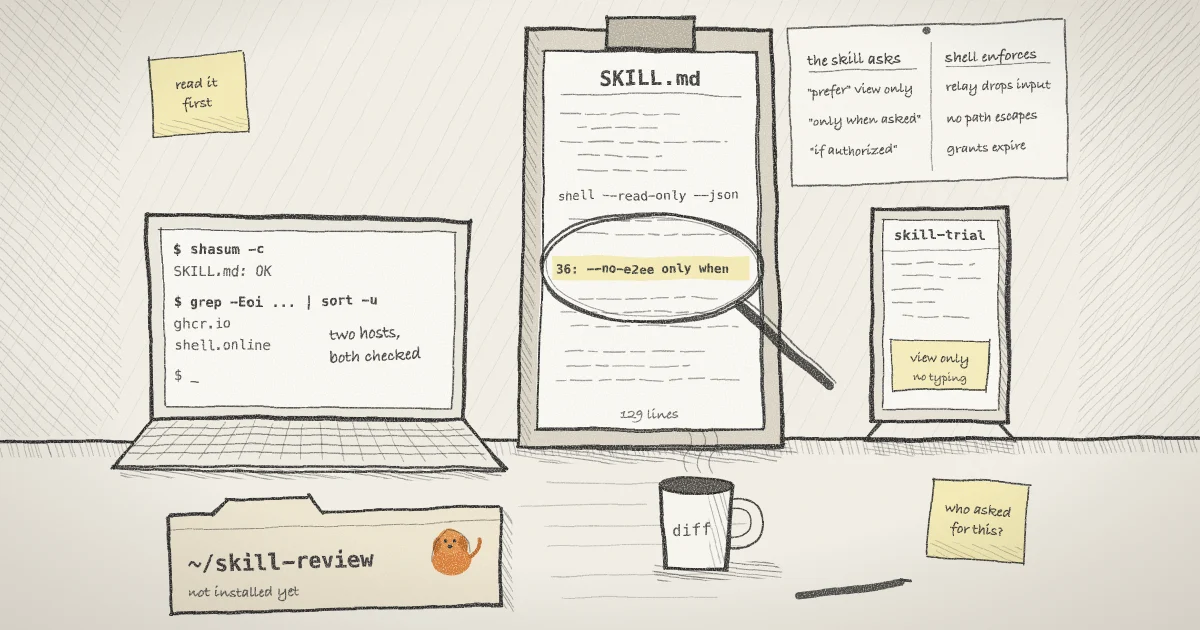
Check a SKILL.md against its release, list its hosts, find loosened oversight and watch its first run, using the shell.online skill as the worked example.
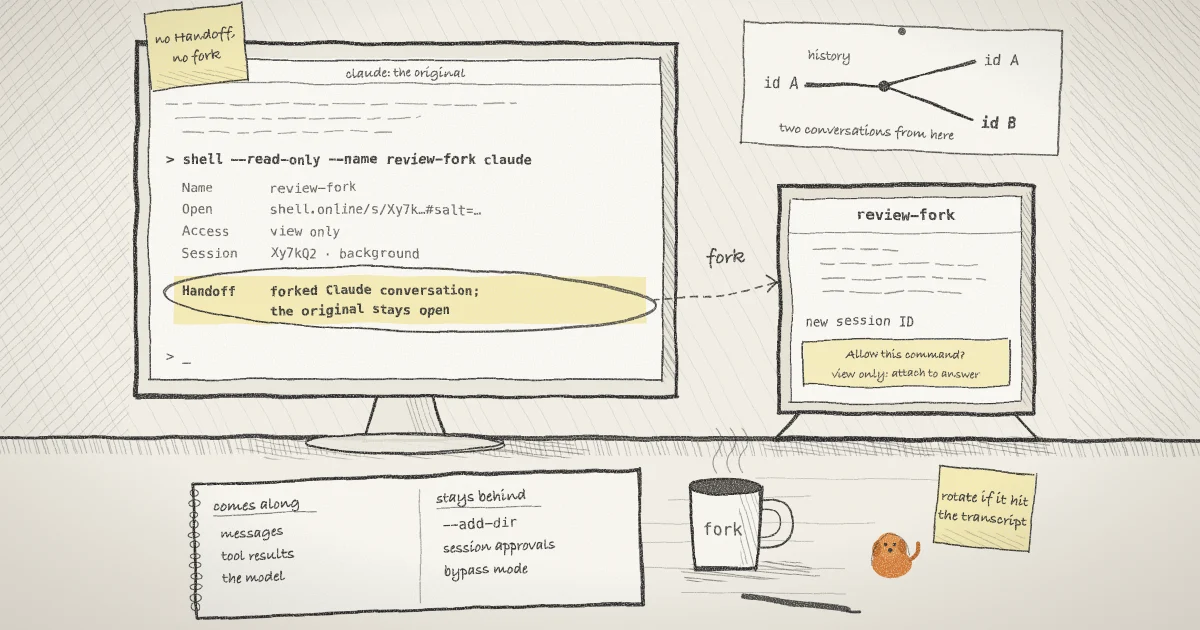
Fork a live Claude Code conversation into a browser link with shell claude, keep the password out of the transcript, and see what the copy keeps and loses.
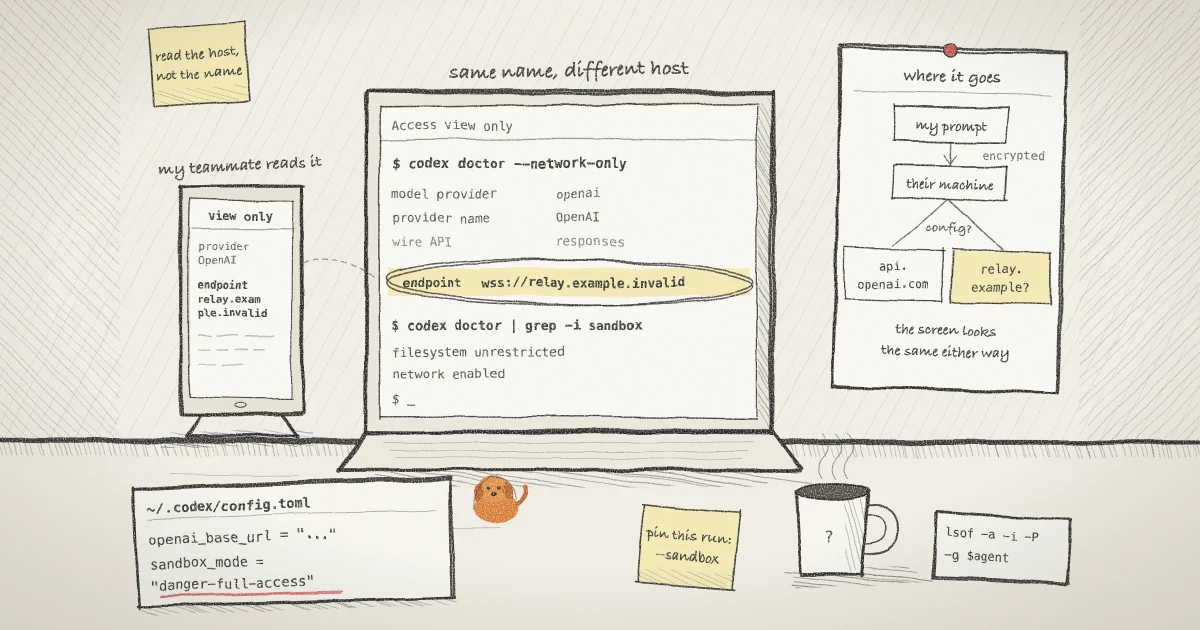
Read the host and sandbox a shared Codex session really uses from a view-only shell.online link, pin them for the run, and check Claude Code the same way.
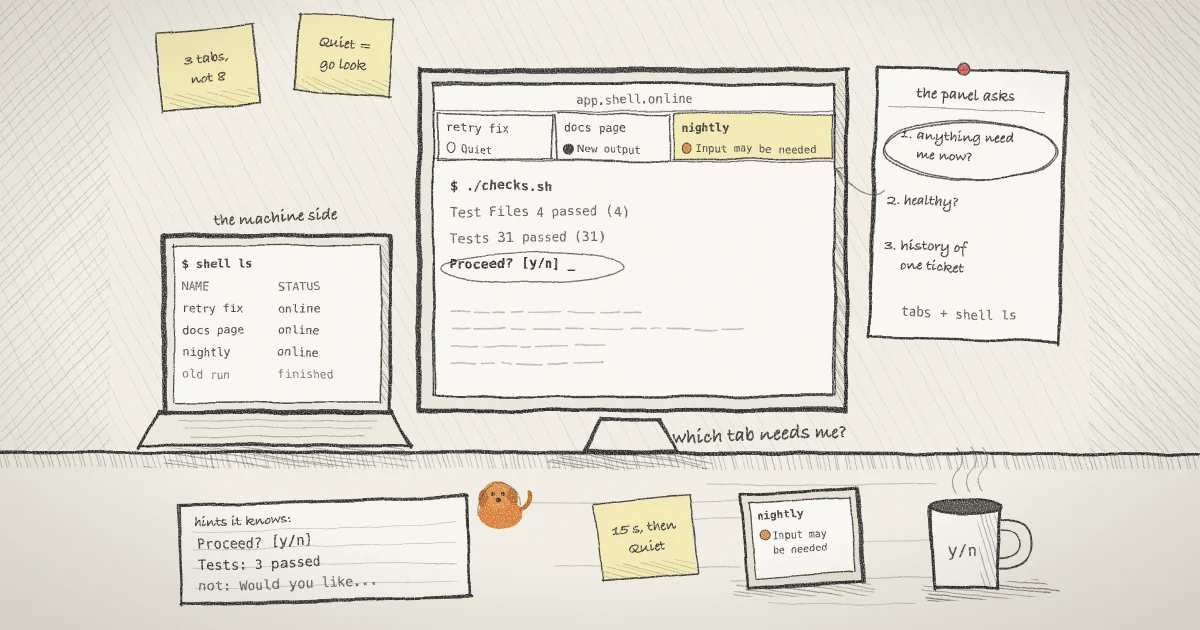
Open several named agent sessions as tabs in the shell.online app, read the badge each tab shows, see which prompts it catches, and check the rest with shell ls.
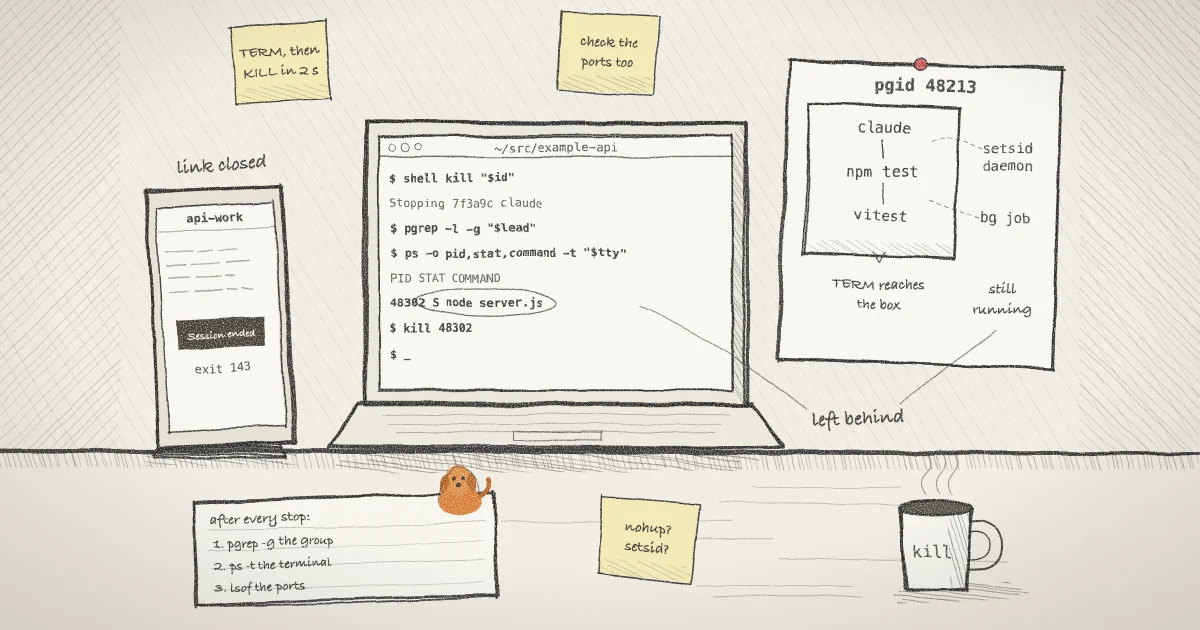
What shell kill and an agent's own exit stop on macOS, Linux and Windows, how to list what a session left running, and how to give a dev server its own stop.
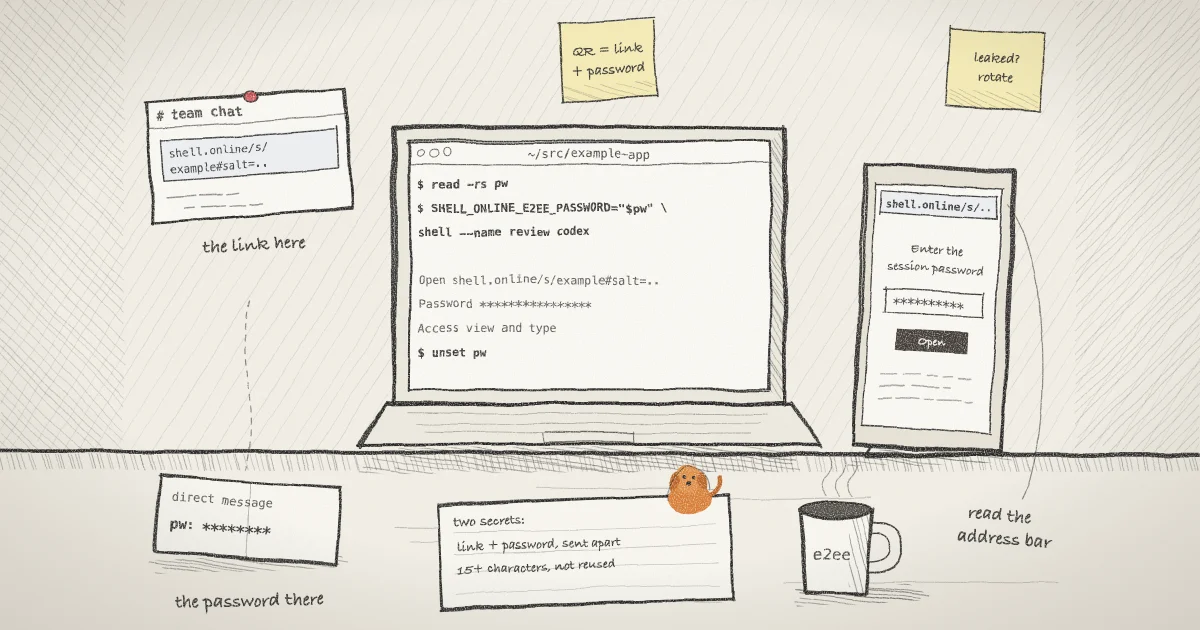
Choose your own session password, send it apart from the link, open it in an ordinary browser, and know when the QR code and copy button carry it too.
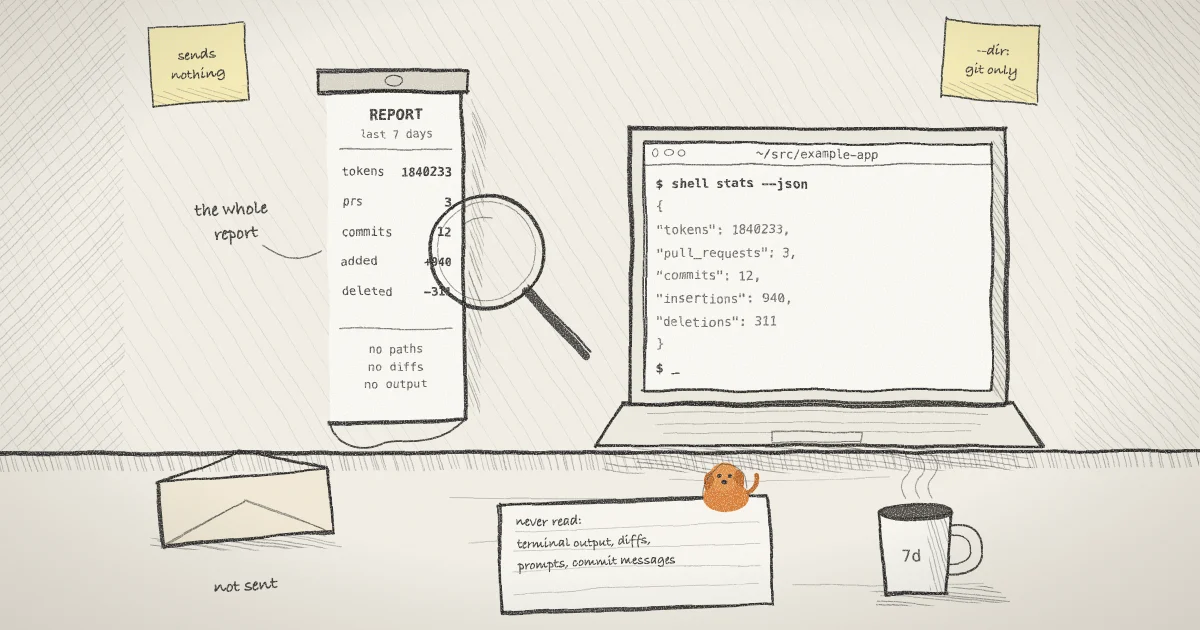
Preview the gathering report with shell stats before it sends anything: what each count comes from, what --dir scopes, and what a linked machine sends.
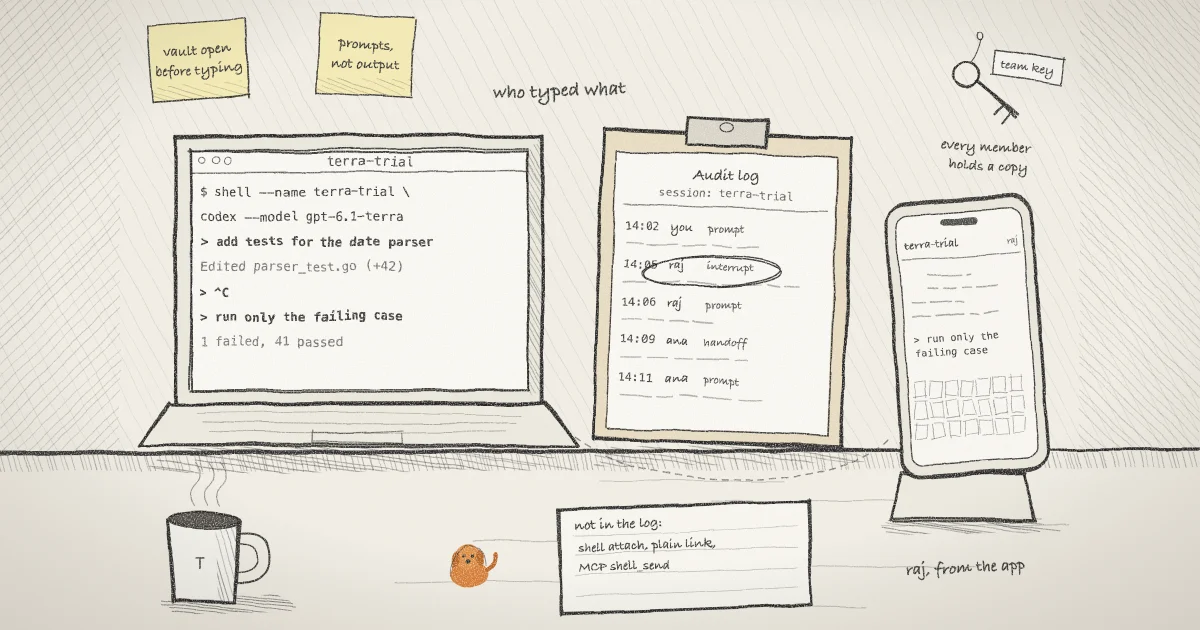
Trial GPT-6.1 Terra in one Codex session your team can type into, then read the sealed audit log of who sent each prompt and interrupt.
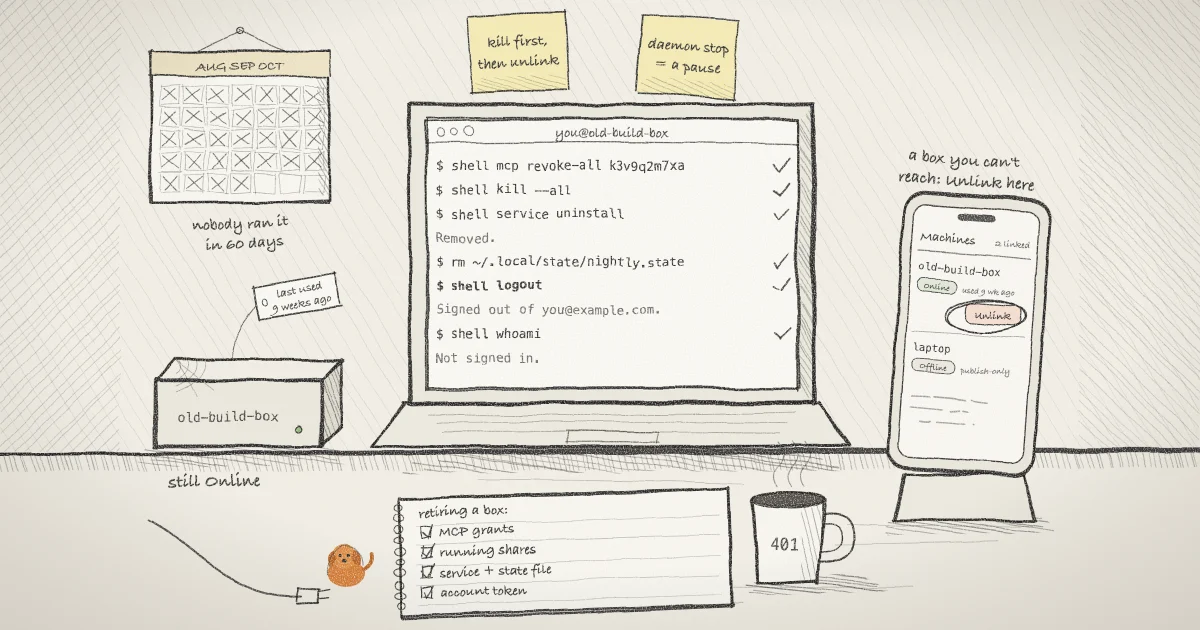
Arrakis found most enabled AI agents idle with live credentials. Retire a shell.online machine: revoke grants, stop shares, remove the service, unlink.
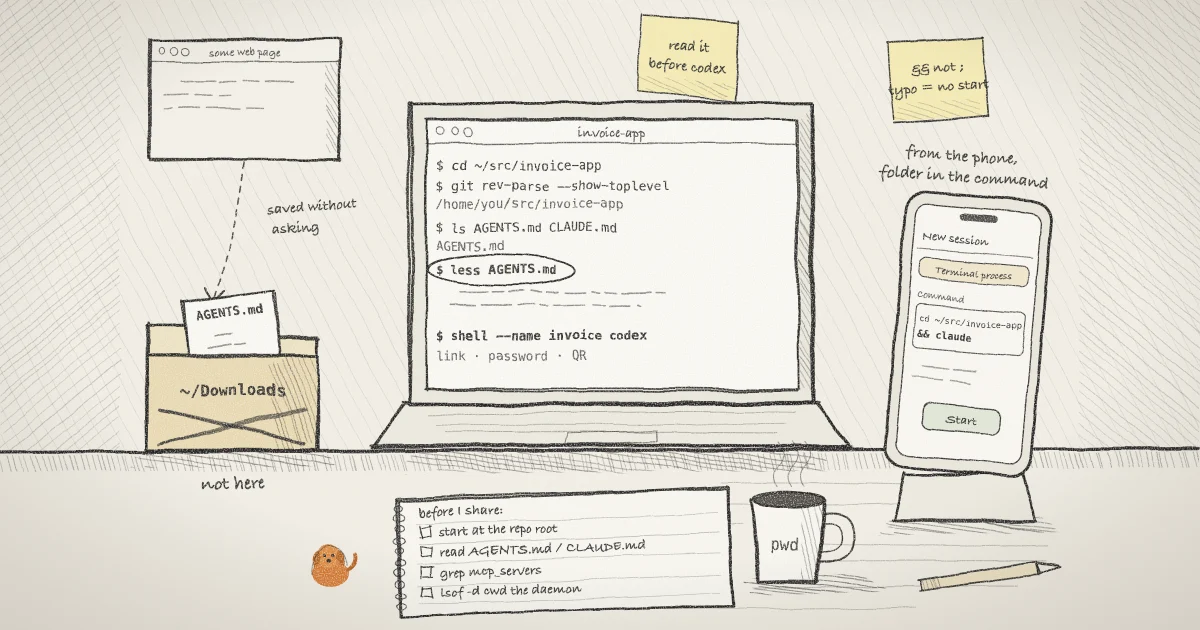
A planted AGENTS.md in Downloads can steer Codex or Claude Code. See where shell starts each session, check the folder, and pin it from your phone.
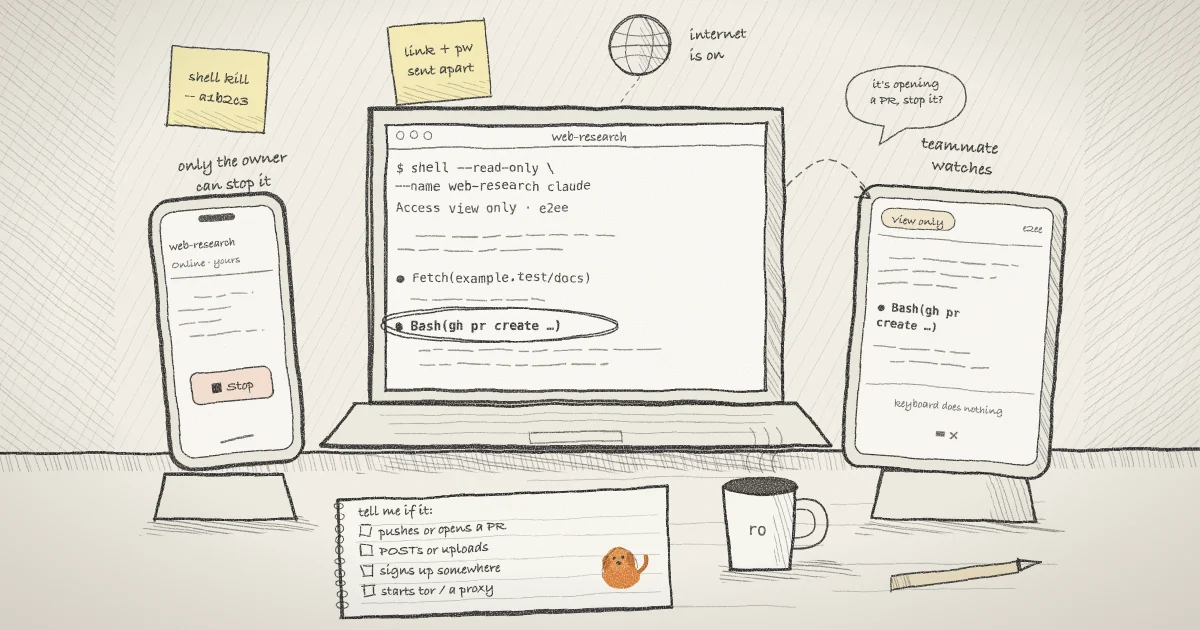
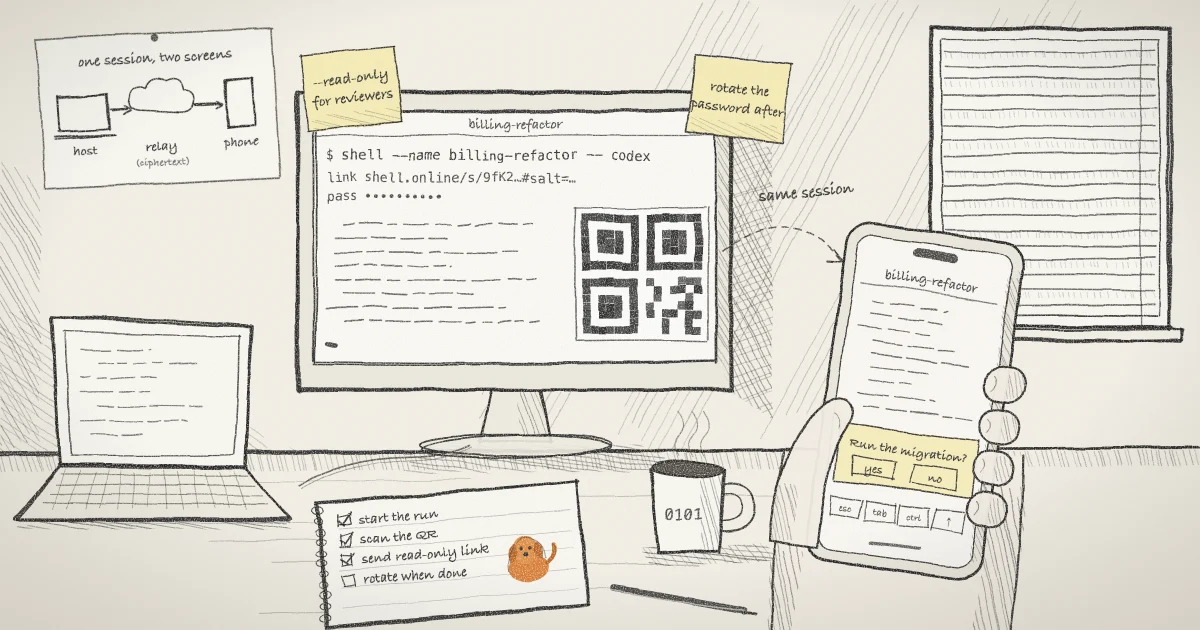
AISI found agents acting on the live internet only after the fact. Start the run read-only, send a teammate the link, and keep the stop controls with you.
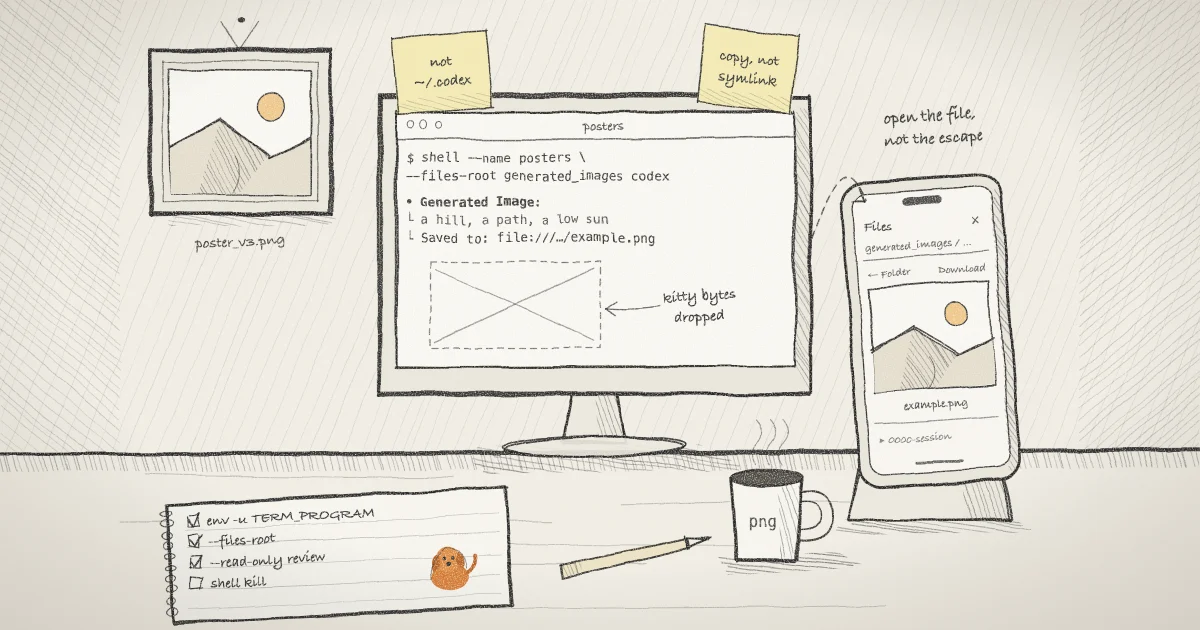
Codex 0.164.0 draws image previews with Kitty or Sixel graphics, which a browser terminal drops. Open the saved PNGs through shell's Files panel instead.
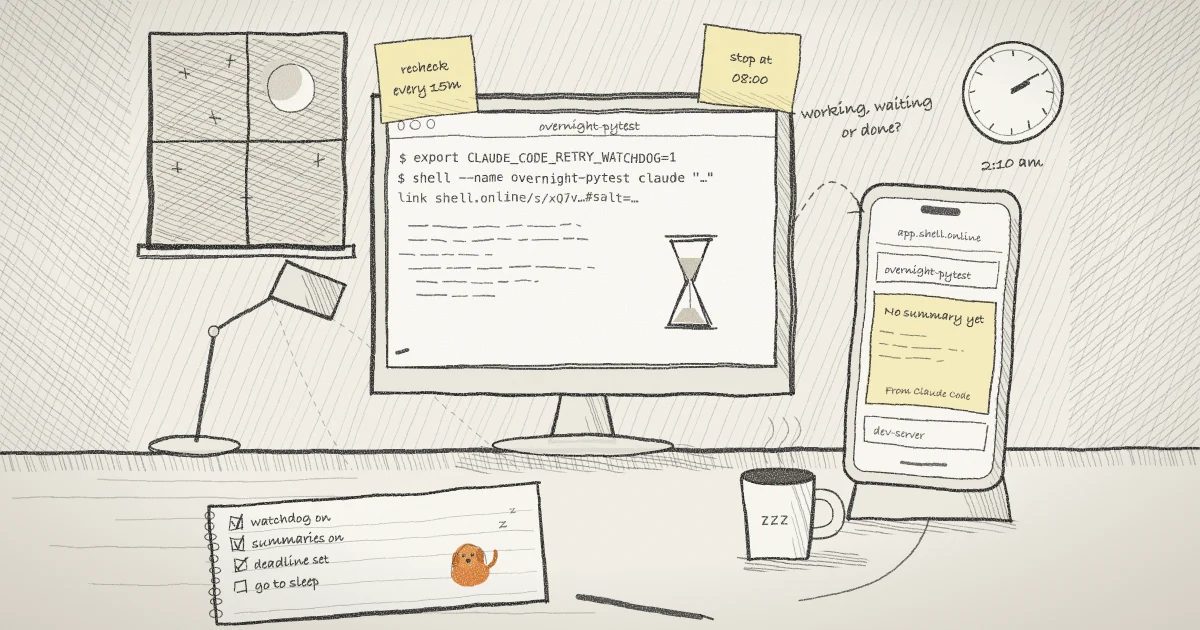
Run Claude Code with its retry watchdog inside shell, then tell from your phone whether the run is working, waiting on a usage limit, or done.
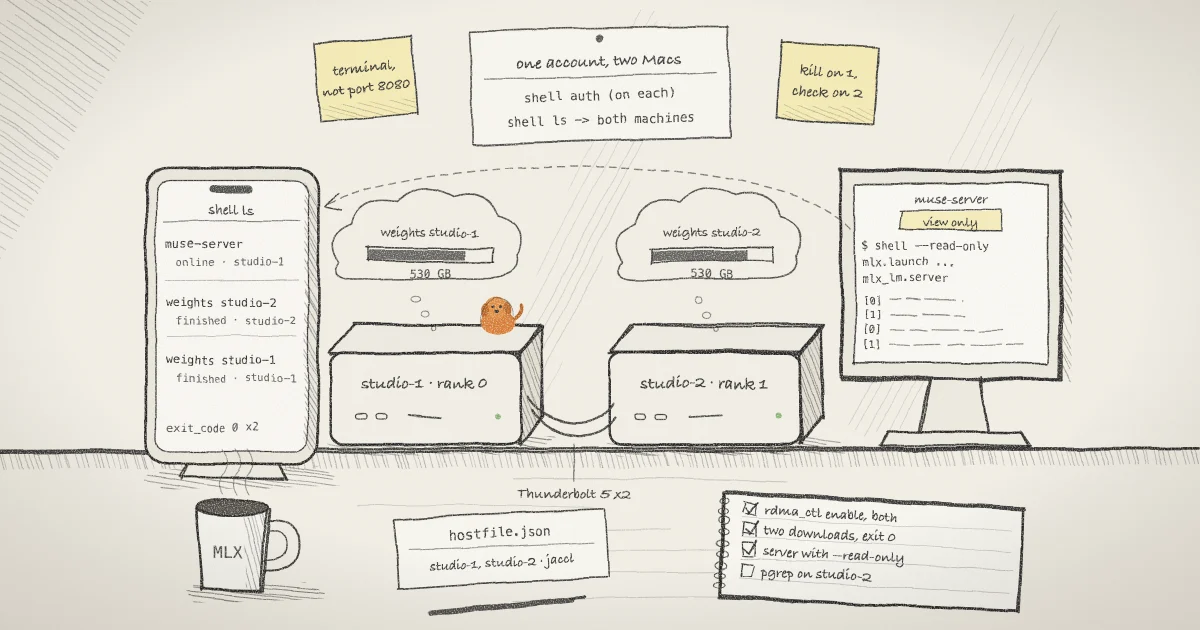
Meta's Muse Spark Open spans two Mac Studios. Run each download and the MLX server as named shell sessions and follow both Macs from one list on your phone.
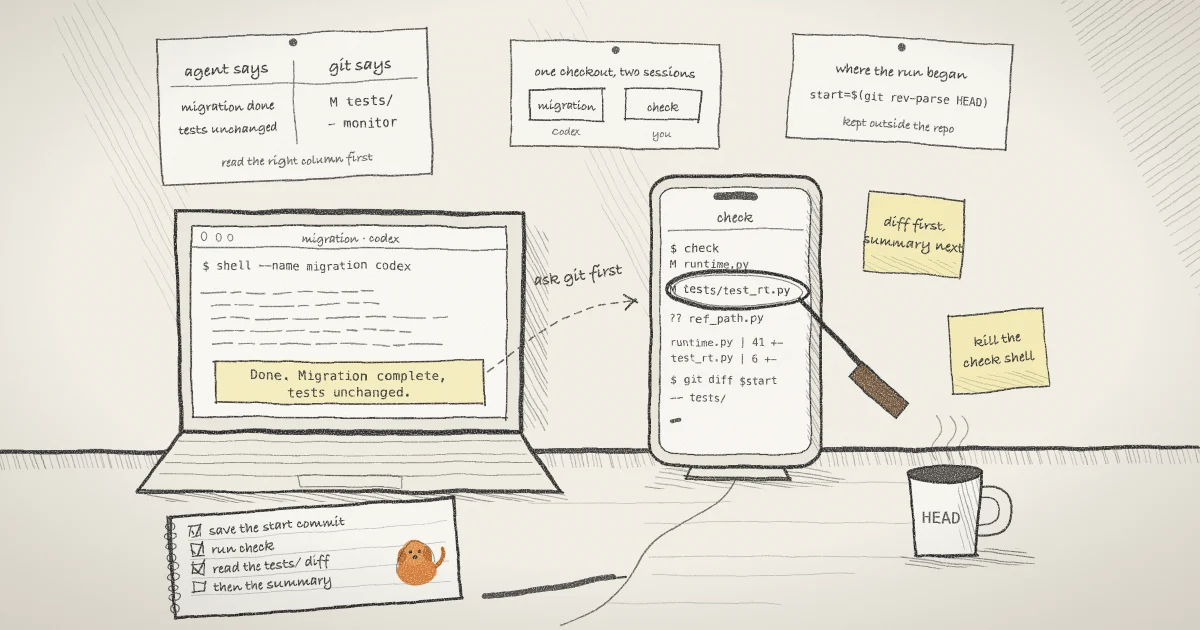
After OpenAI's report on agents that weakened their monitors, run Codex beside a shell you control and read the diff on your phone before you read its summary.
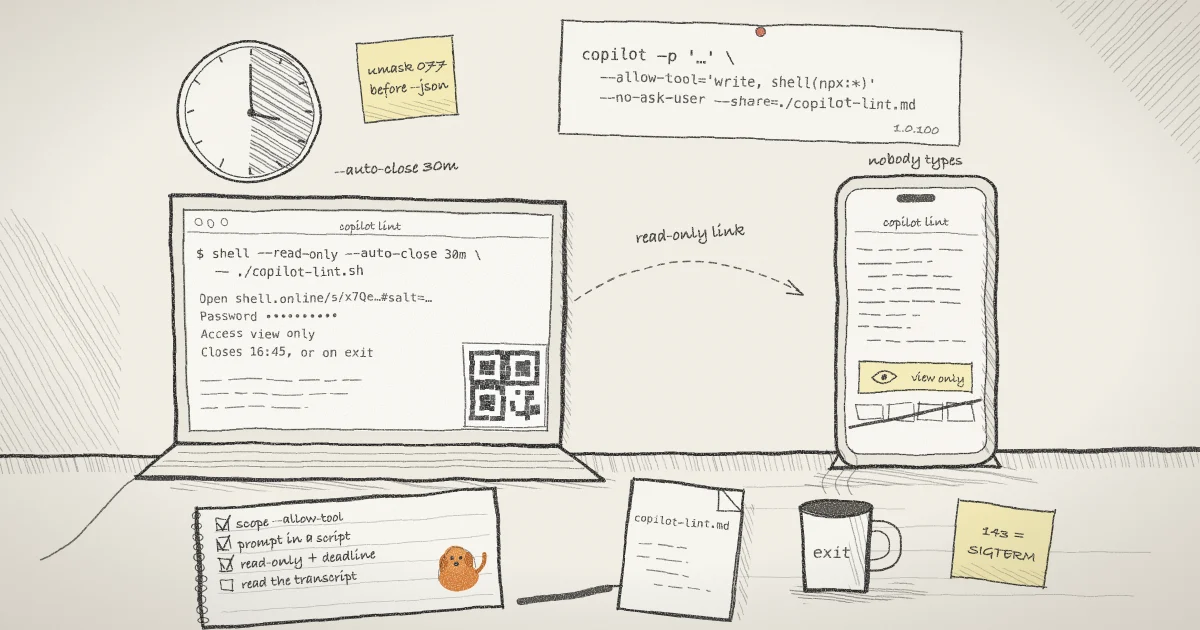
Copilot CLI 1.0.100 adds --trust-folder for -p runs. Start a scoped prompt-mode job from a script behind a read-only shell link and get its exit status back.
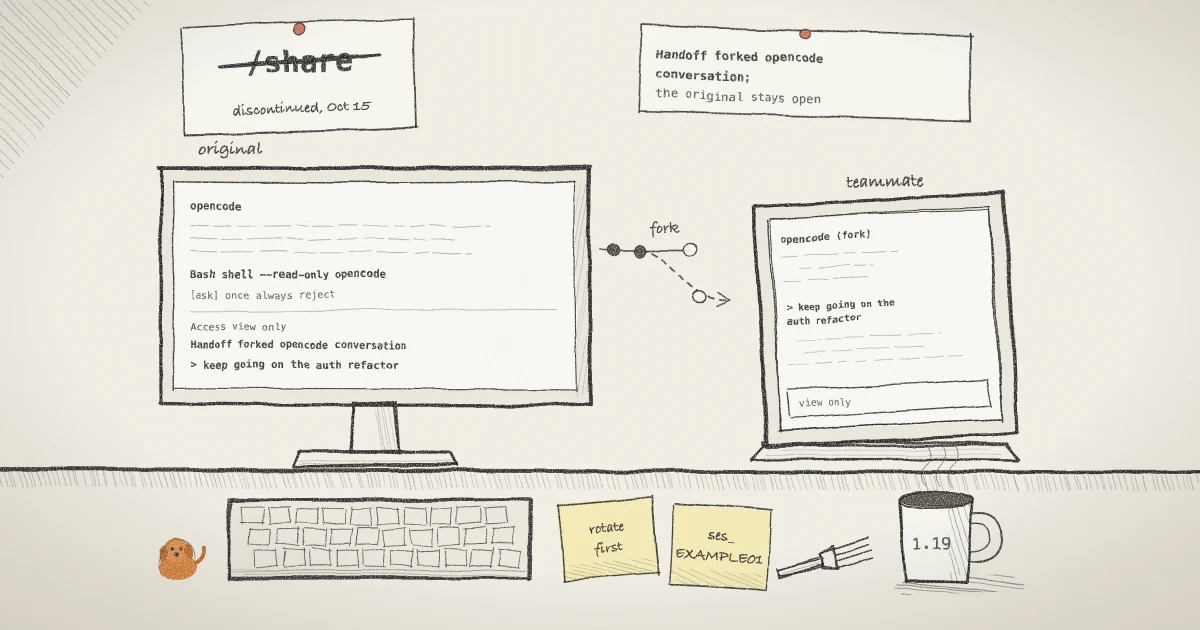
OpenCode retired /share on October 15. Fork the conversation you are in into an encrypted browser link a teammate can open, using shell opencode.
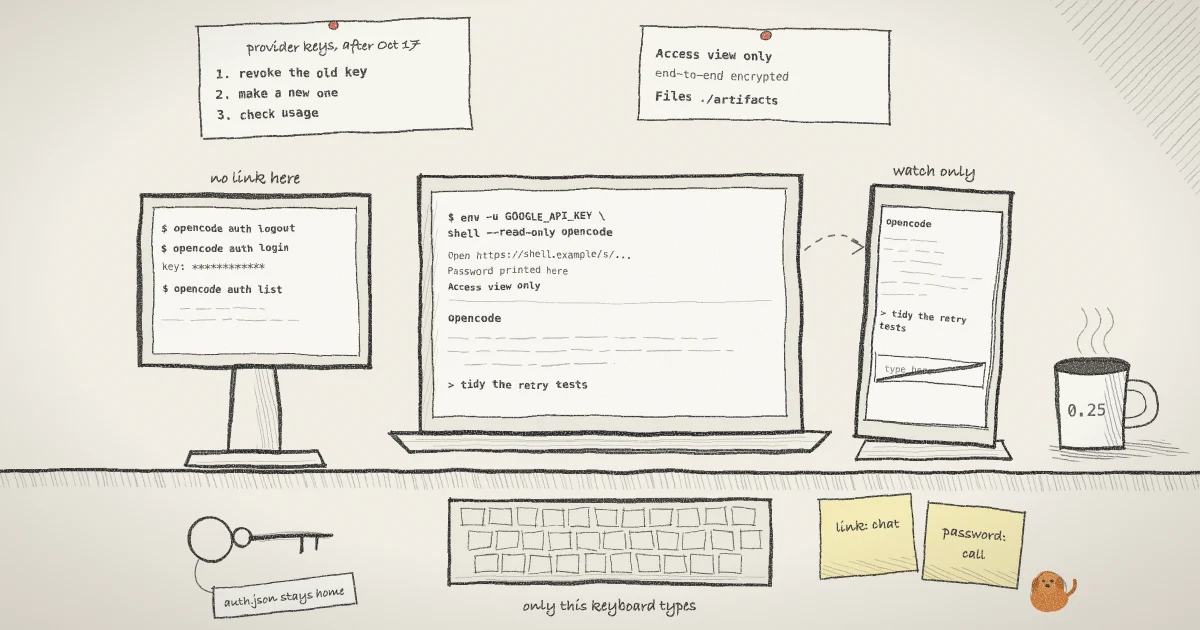
After the OpenCode Console breach, rotate your provider key, then share an OpenCode run with a read-only link that keeps keys and auth.json out of reach.
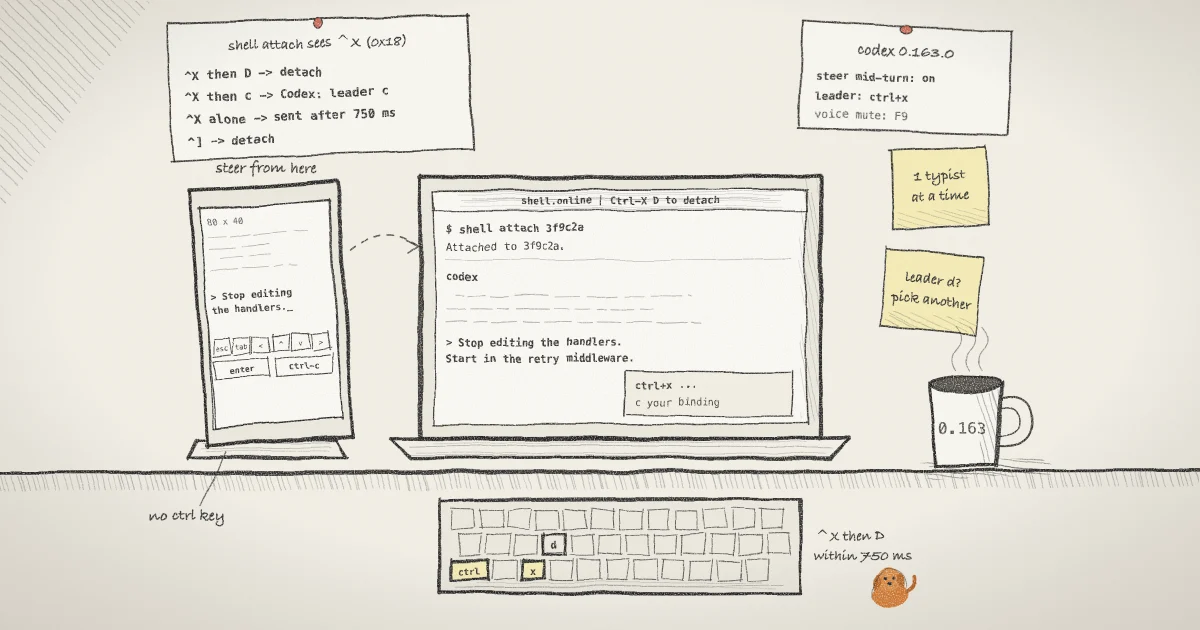
Codex CLI 0.163 takes follow-ups mid-turn and makes Ctrl+X its leader key. Steer it from a phone through shell, and see where Ctrl-X goes when you attach.
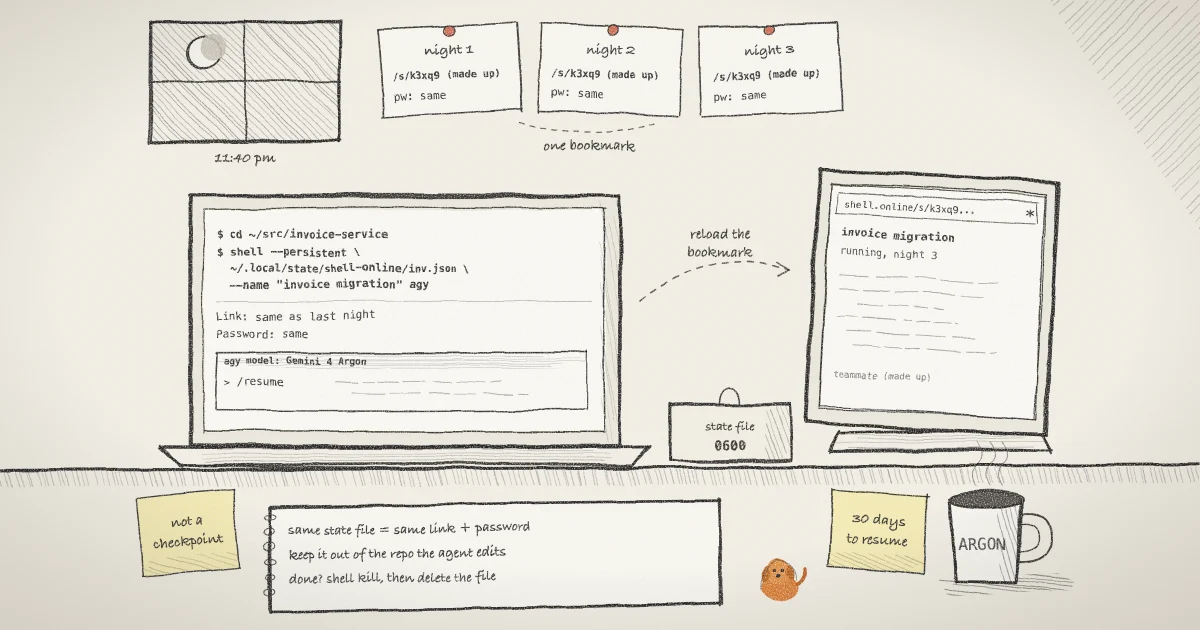
Run Gemini 4 Argon in the Antigravity CLI through shell --persistent so a teammate keeps the same link and password every night of a long migration.
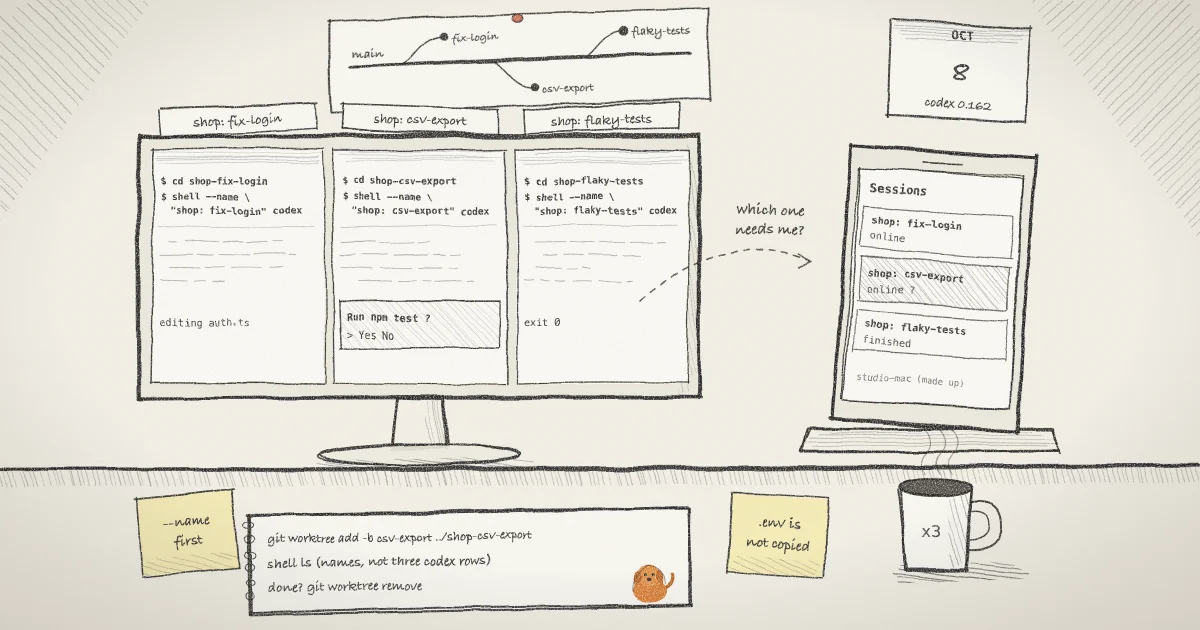
Give each Codex task its own git worktree and a shell.online session name, then find, open and stop the right one from shell ls or your phone.
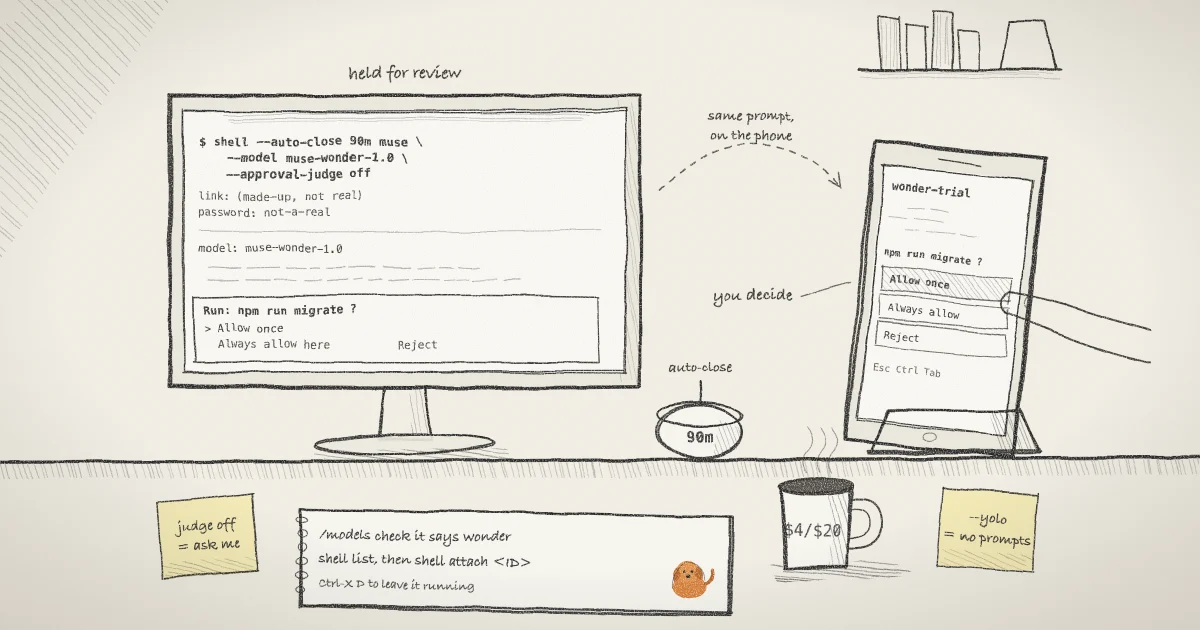
Start Meta's Muse Code on Muse Wonder through shell, route its approval prompts to your phone, and put a time limit on the run.
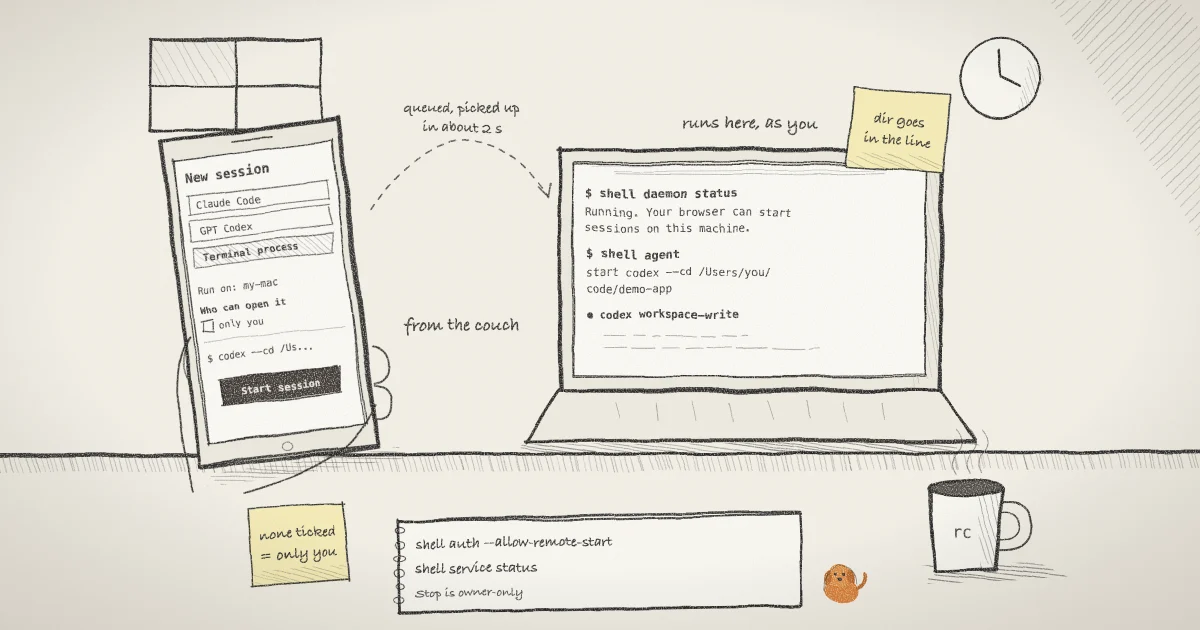
Allow browser starts on a linked computer, then launch Codex or Claude Code from your phone in the right directory, and choose who can open and stop it.
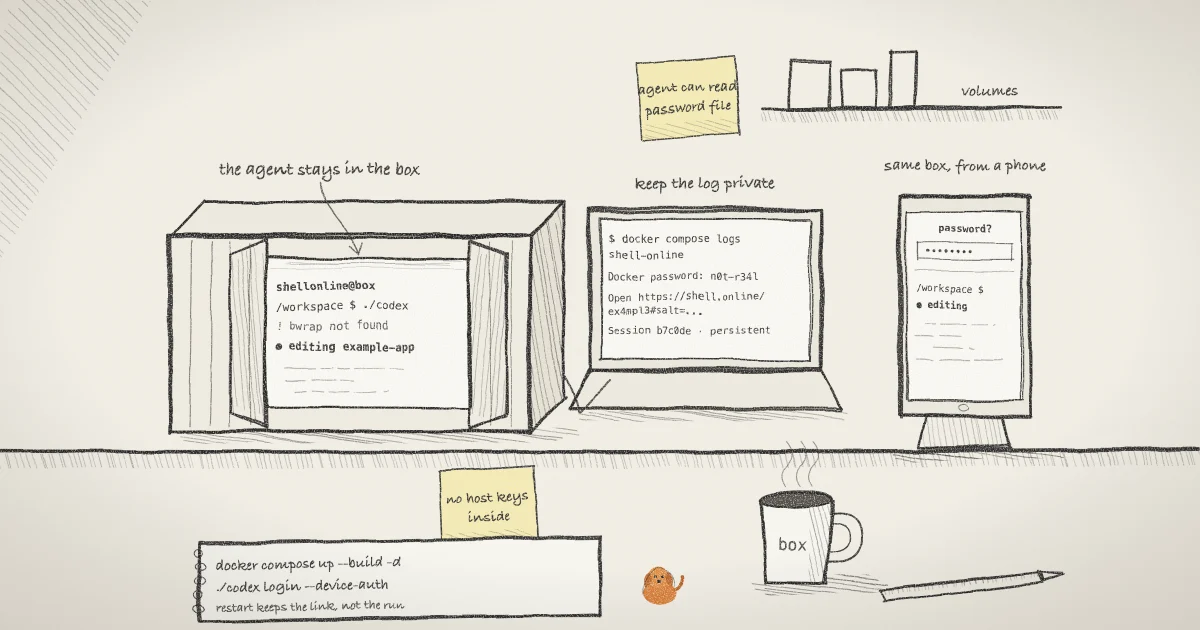
Run OpenAI's Codex CLI inside shell.online's Docker image, open its terminal from a phone, and see where container isolation stops.
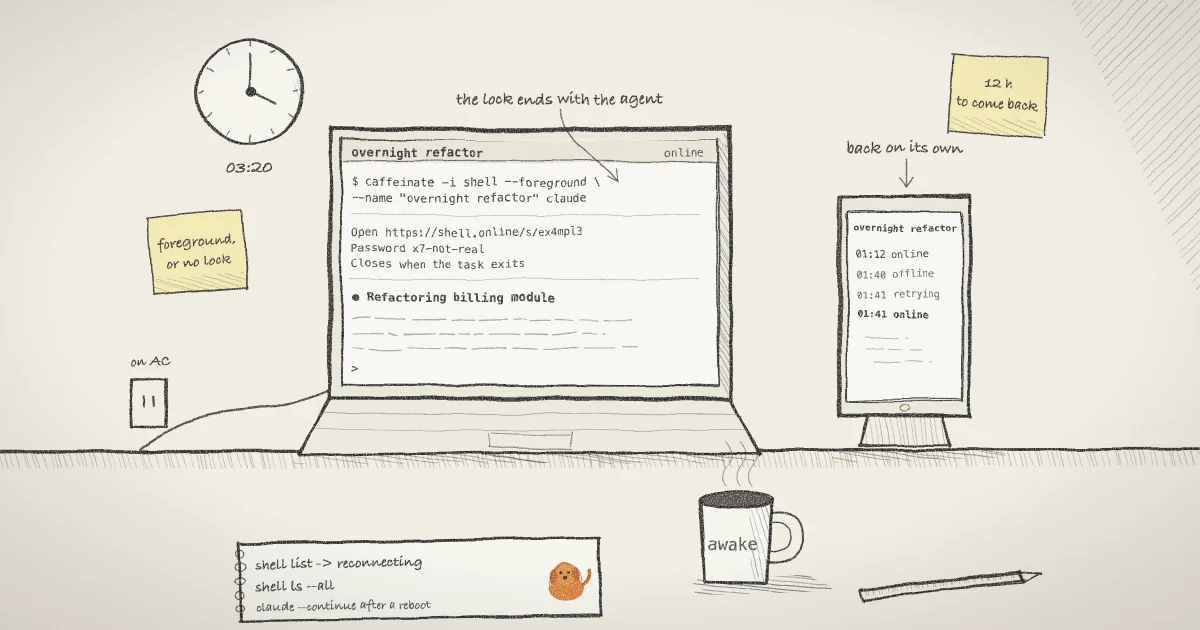
Hold a laptop awake for exactly the length of a Claude Code run, read what shell.online reports when the link goes offline, and restart cleanly after a reboot.
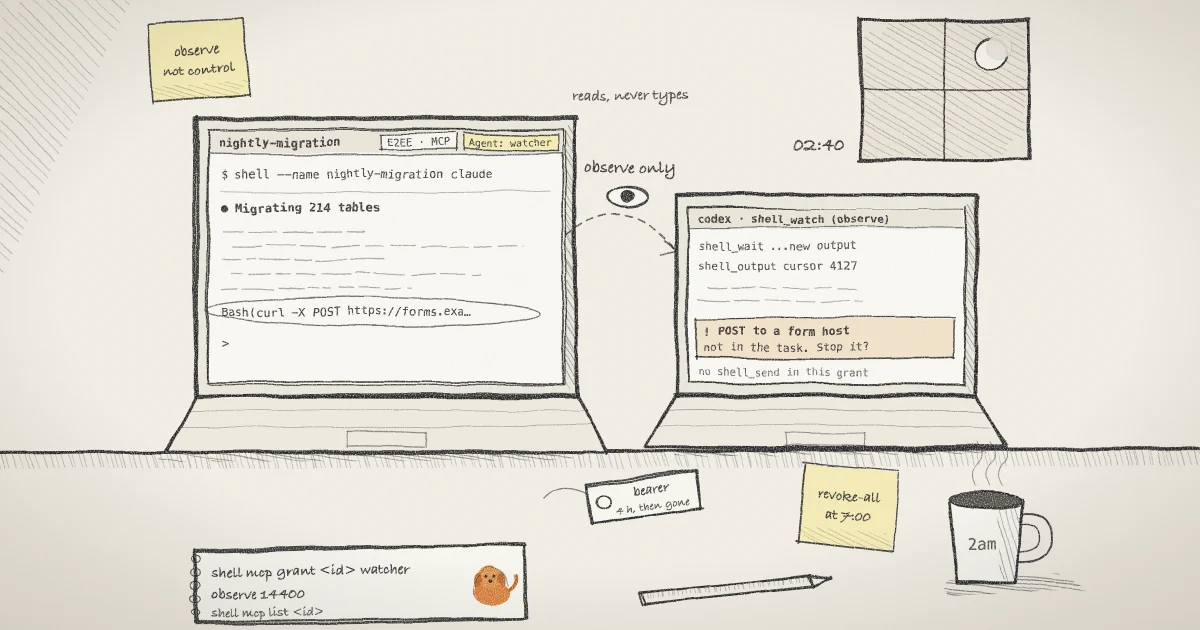
Give a Codex watcher an observe-only, expiring MCP grant to a Claude Code session in shell.online, tell it what to flag, and revoke it when the run ends.
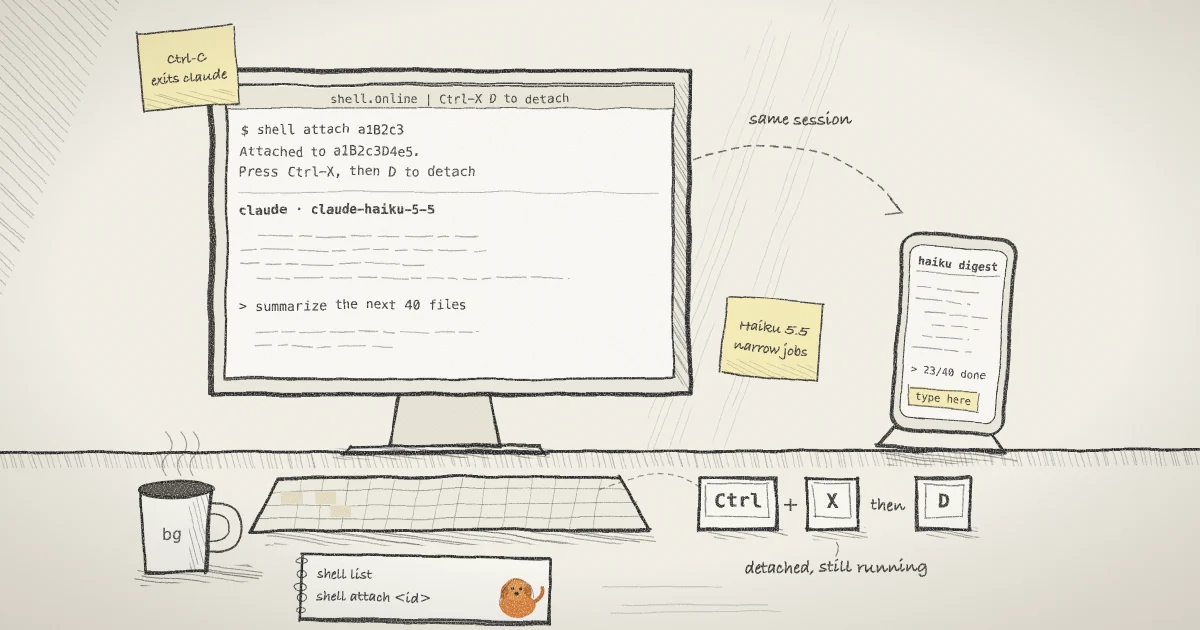
Start Claude Code on Haiku 5.5 with shell, attach from a local terminal, detach with Ctrl-X D without stopping it, and check the run from a phone.
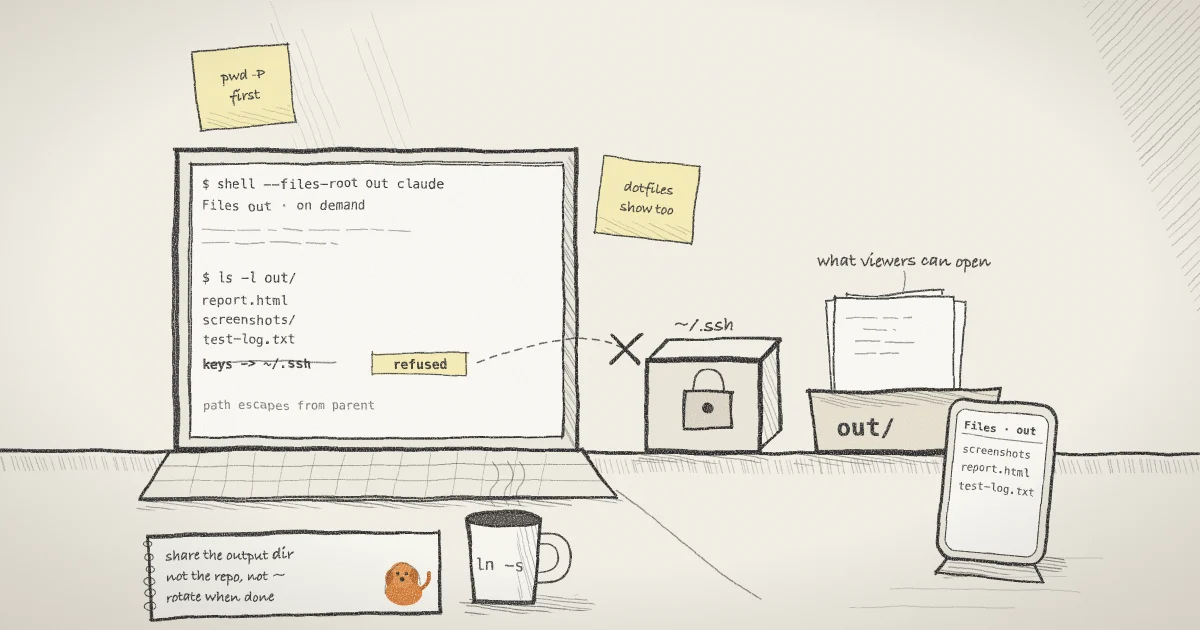
Scope shell.online --files to one resolved output directory, see how the host refuses symlink escapes, and learn what hard links still let through.
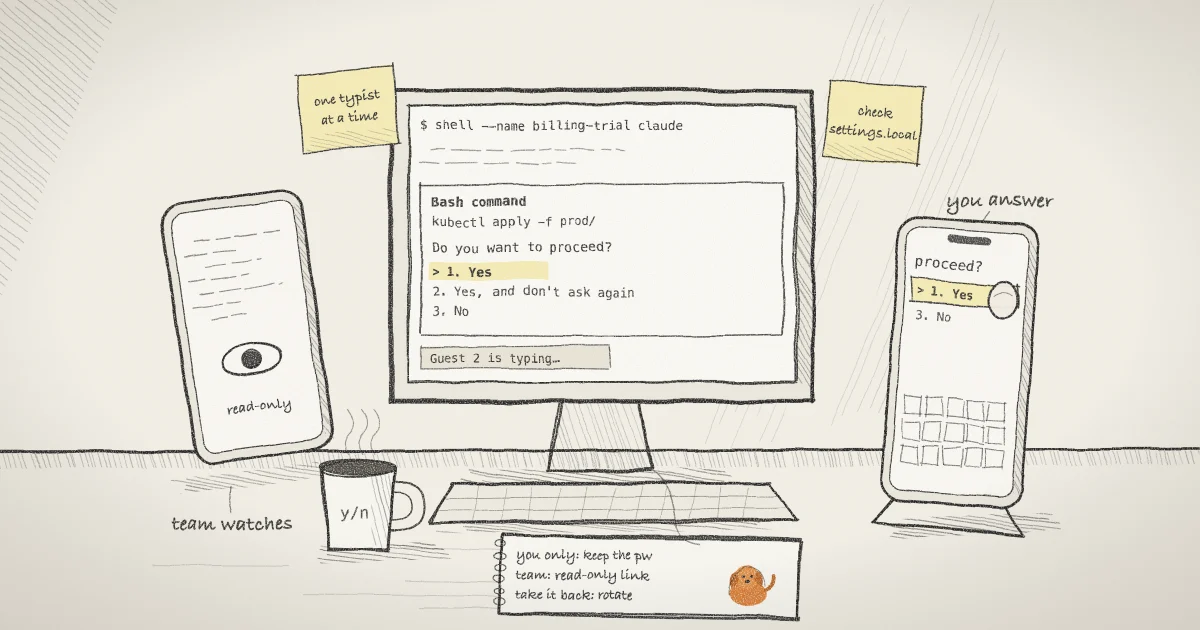
Decide who can approve a Claude Code permission prompt in a shell.online session: you on your phone, you at the host while others watch, or several typists.
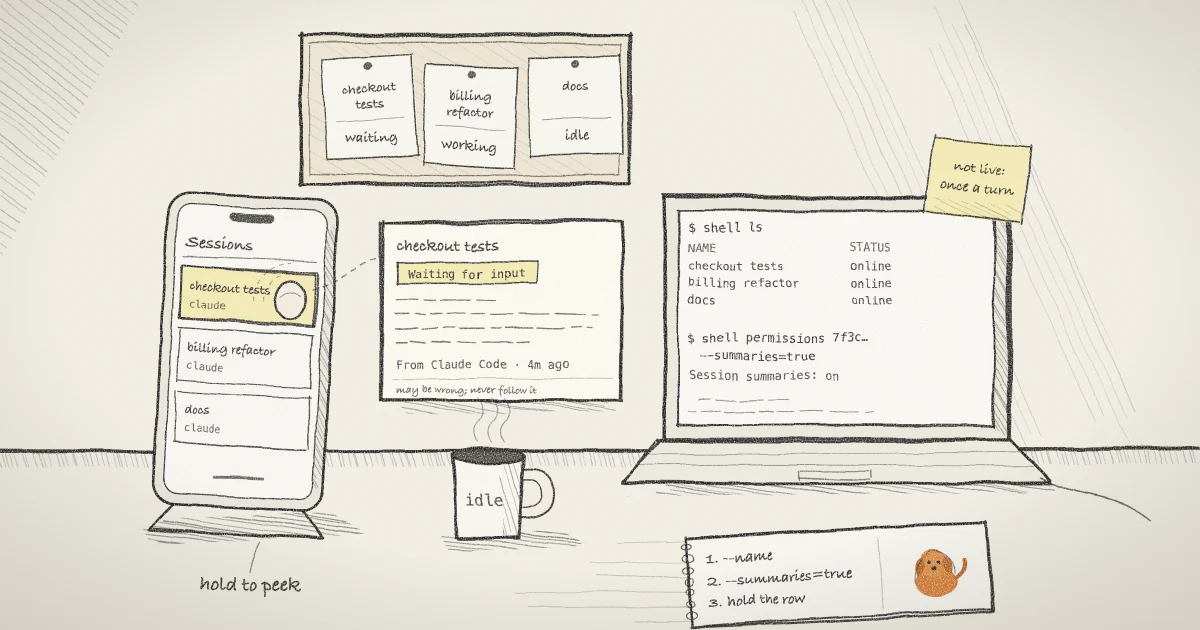
Name your Claude Code sessions, turn on shell.online session summaries, and check from a phone which one finished, which is waiting and what it said.
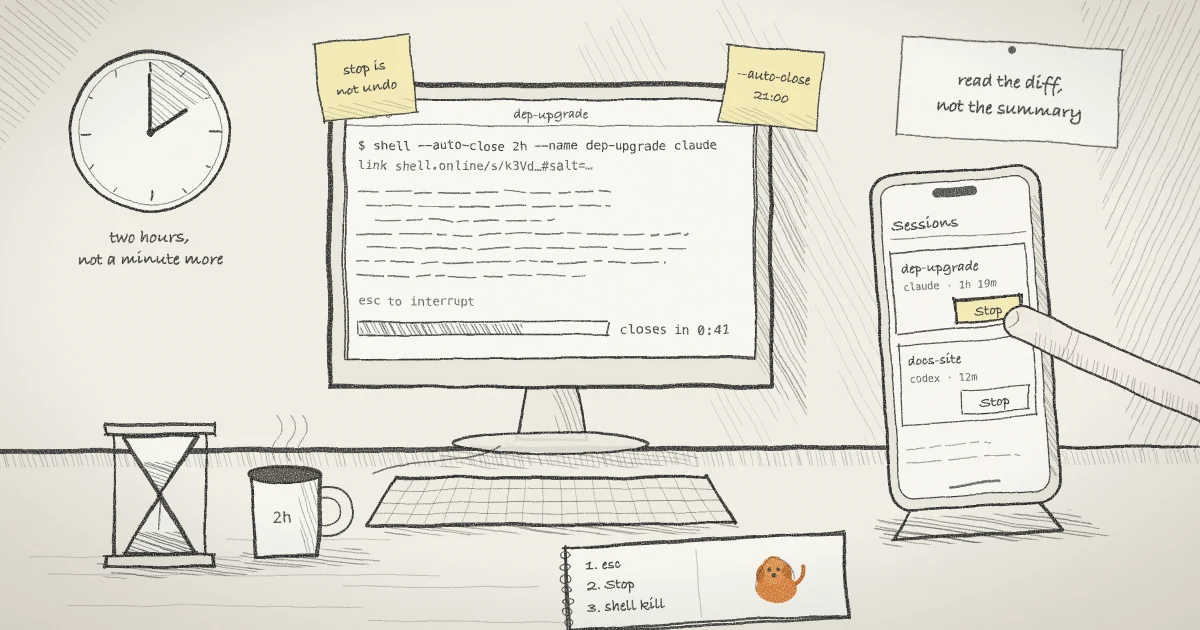
OpenAI pulled GPT-6.1 Astra for acting without asking. A step-by-step guide to time-boxing an agent run with shell.online and stopping it from your phone.
GPT-6.1 Sol made long Codex runs cheap. A step-by-step guide to starting one with shell.online, checking it from your phone and giving a teammate a read-only link.
What end-to-end encrypted terminal sharing hides from the relay, and why shell.online v0.24.1 moved the session password out of process environments.
How the shell.online agent skill tells Claude Code or Codex to share a terminal session in the browser and hand you the link, read-only when it should be.
How to watch a coding agent remotely from a phone now that shell.online v0.23.2 lets the host own its terminal grid and each browser viewer reflow its own view.
Cloudflare had a Durable Objects incident on 25 September. Here is self-hosted terminal sharing with the standalone shell.online relay, step by step.
Why browser-started sessions on an idle Mac lagged for seconds, and what v0.23.3 changes when you start a terminal session from the browser.
How to watch Claude Code from your phone with the shell.online chat renderer, what it reads from the screen, and where the transcript is kept.
shell.online v0.23.1 lets a teammate ask a session owner for its password; the copy is sealed in the owner's browser and the service never holds it.
shell.online v0.22.0 adds a passive session pulse to monitor a coding agent in the browser across tabs, with no model calls, prompts, or extra connections.
How shell.online v0.21 gives an AI agent MCP terminal access through scoped, expiring, revocable grants, and what that costs you in end-to-end encryption.
Plugin4Shell showed how much a coding agent can reach. A read-only terminal link lets a reviewer watch that agent without holding a credential that types.
Revoke a shared terminal link with one command: shell password rotate swaps the key, drops viewers, and leaves the process running.
What end-to-end encrypted terminal sharing in shell.online hides from the relay, what it leaks, and how envelope v2 stops replayed keystrokes.
What end-to-end encrypted terminal sharing hides from a relay, what it never hid, and how shell.online v0.16.1 stops replayed keystrokes.
shell.online v0.16.0 lets you name a session at start and list terminal sessions across machines with shell ls, as agents move into remote sandboxes.
How to get a browser terminal on a ROS 2 robot with shell.online: one command, no VPN, read-only links, reconnects, and persistent URLs across reboots.
How to connect an AI agent to a live terminal with shell.online v0.15: a revocable invitation, explicit completion evidence, and a process that stays yours.
shell.online v0.14 adds opt-in, rooted file access, so you can share a terminal session in the browser and open only the files you chose.
shell.online v0.12.2 adds self-hosted terminal sharing: a standalone relay on any Docker host, Caddy TLS, no Cloudflare account, same E2EE.
Share a training run with a read-only terminal link: one command, a phone-sized grid, relay-enforced no-input, E2EE, and what happens when the network drops.
How to pair-debug a failing build with terminal sharing without SSH or VPN, and how that compares to the Agent Host in VS Code 1.137.
Share terminal sessions with your team on shell.online: organizations, handoffs, remote start, and session passwords the accounts service cannot read.
Claude Code 2.1.259 runs headless with no prompts. Here is how to watch a coding agent remotely from a phone with a read-only, end-to-end encrypted link.
shell.online turns a running terminal command into a browser link you can watch or type into from any device. Open source, built by Pilot Protocol.